The 10 Best Games Like Factorio: The Ultimate List for Automation Addicts (2026)
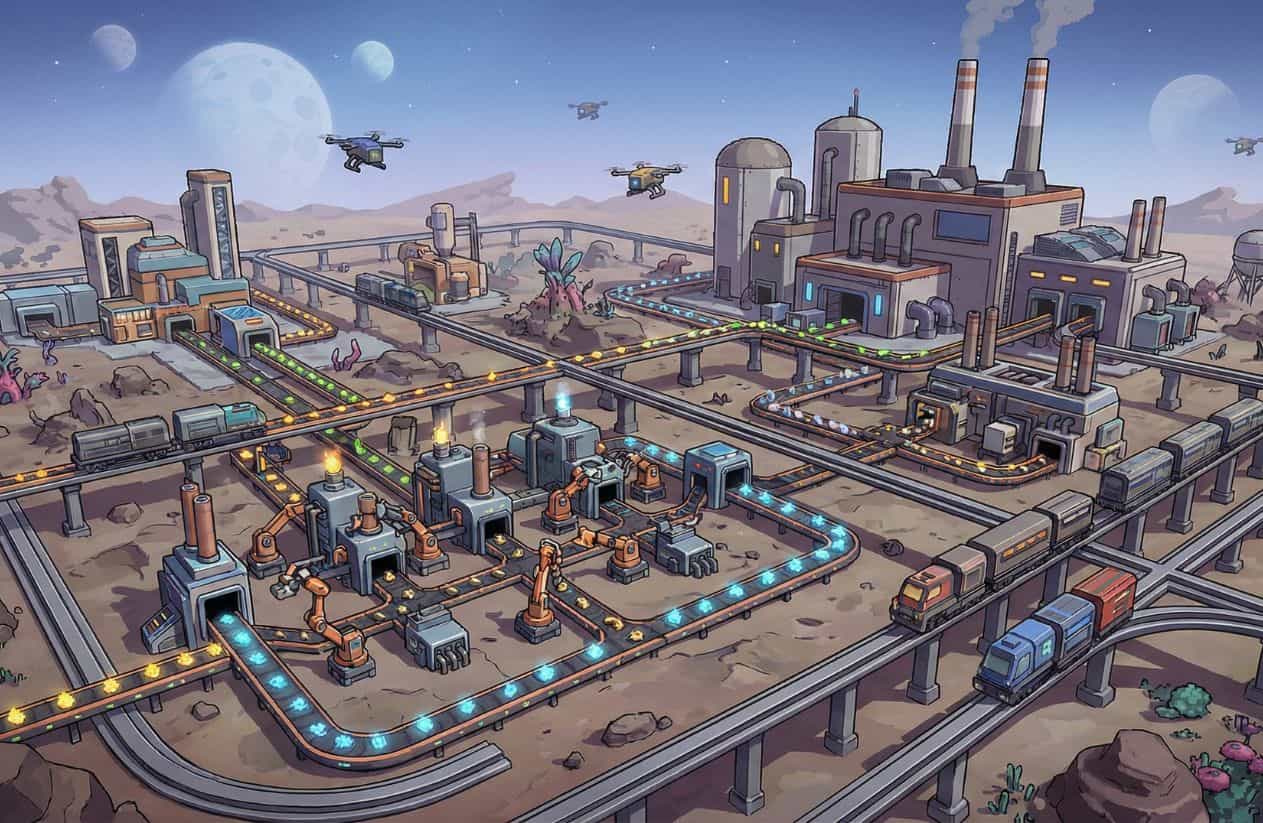
You know the feeling. You close your eyes after a six-hour session, and you still see conveyor belts moving behind your eyelids. That’s the “Factorio itch,” and honestly, not just any casual base-builder can scratch it. True automation addicts aren’t looking for pretty landscapes or survival RPG elements; we want the “pure” stuff. We crave top-down grids, complex logic gates, fast inserters, and the infinite pursuit of perfect throughput efficiency.
In this list, we’re cutting the fluff. We have deliberately ignored the generic 3D survival clones to focus entirely on the best Games Like Factorio that respect the sanctity of the belt. If you prioritize hardcore logistics and ratio-perfect production lines over meaningless loot, you’re in the right place. Let’s expand the factory.
The Direct Successors (Belt-Focused Gameplay)
1. Shapez 2
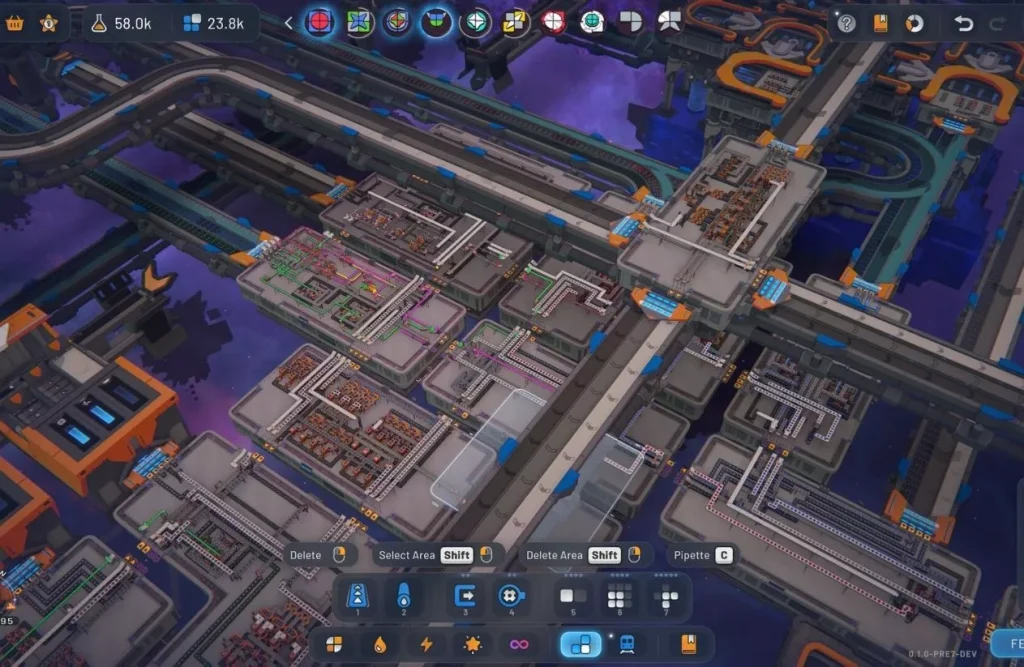
The “Purest” Form of Automation
If you stripped Factorio of its bugs, biters, and pollution mechanics, leaving only the raw, unfiltered dopamine hit of optimization, you’d get Shapez 2. This isn’t about surviving on a hostile planet; it’s about geometry and efficiency. You are tasked with cutting, rotating, stacking, and painting abstract shapes on a massive scale to feed a hungry vortex.
What makes it special is the sheer freedom. You build on an infinite 2D plane (with multi-layer 3D verticality for your belts), meaning you never run out of space. There is zero combat and no penalty for failure—just the pressure you put on yourself to make the lines faster.
With the addition of space trains and massive modular platforms in the sequel, it captures the “mega-base” feeling of late-game Factorio without the stress of being eaten by aliens. For players who see the factory itself as the only enemy, this is the ultimate zen garden.
2. Mindustry
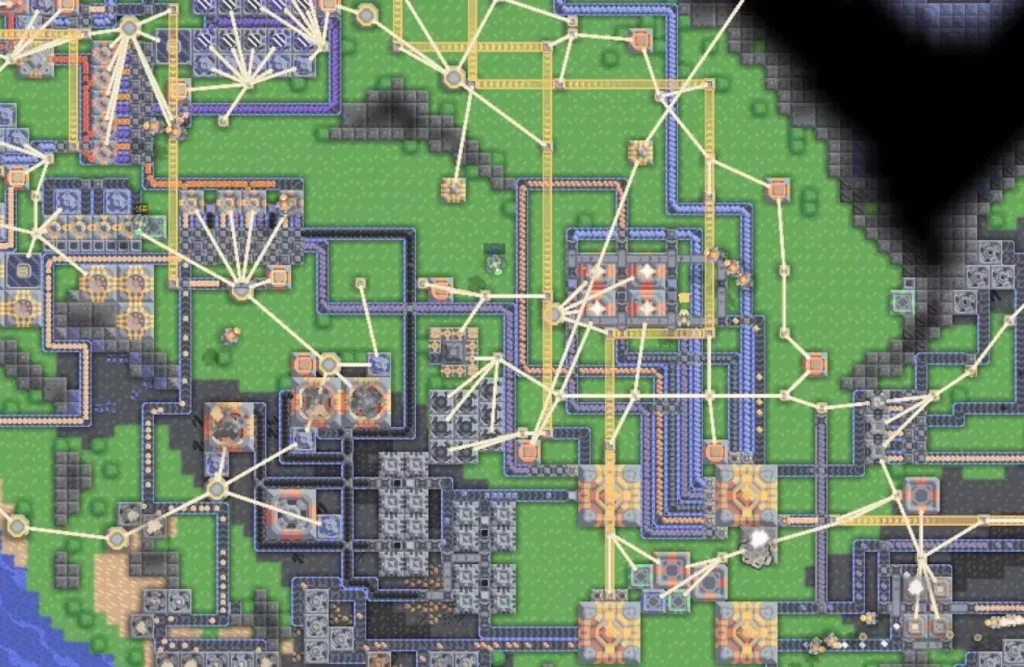
The Factorio-Tower Defense Hybrid
At first glance, Mindustry looks like a pixel-art Factorio clone. You have the belts, the drills, and the copper/lead early game. But play for five minutes, and you realize the vibe is completely different. While Factorio is a slow burn of expansion, Mindustry is a frantic, wave-based war for survival.
The core loop isn’t just “build a rocket”; it’s “feed the guns or die.” You aren’t just automating science; you are automating a massive supply chain of ammo, coolant, and building materials to hold back increasingly aggressive waves of enemies. The logistics are just as deep—you still deal with belt weaving, overflow gates, and logic processors—but the pressure is immediate.
With the v7 update adding a second planet (Erekir) that leans heavily into RTS unit control, it offers a distinct flavor of industrial warfare. Plus, it’s one of the few factory games that actually works brilliantly on mobile, so you can fix your spaghetti on the bus.
3. Dyson Sphere Program
Interstellar Logistics on a Galactic Scale
Don’t let the 3D graphics fool you—Dyson Sphere Program (DSP) is the most faithful evolution of the Factorio formula on the market. While other 3D builders get fiddly with placement, DSP snaps everything to a satisfying grid on spherical planets. It feels surprisingly natural, and the ability to stack belts and sorters vertically adds a new dimension to your spaghetti without making it unmanageable.
The scale here is just absurd. You aren’t just conquering a single map; you are managing a real-time cluster of stars. You’ll be shipping titanium from a lava planet to your home world, setting up logistics vessels to warp between star systems, and eventually constructing a megastructure around a burning sun to harness its energy. It captures that sense of infinite scale perfectly, proving the factory must grow… across the entire galaxy.
The 2D & Isometric Industrialists
4. Factory Town
The Cozy, Gravity-Defying Supply Chain
Don’t let the cute, blocky villagers fool you; Factory Town is a wolf in sheep’s clothing when it comes to complexity. While it starts simple—tossing wood down a wooden chute—it quickly ramps up into a multi-layered logistical beast.
You aren’t just placing belts on a flat plane; you’re dealing with 3D terrain, building scaffolding to route conveyor belts over houses, and using gravity-based chutes to slide resources down mountains to save on energy.
It swaps the sci-fi grit for a fantasy setting, meaning you’ll eventually automate mana crystals and magical books alongside your standard iron plates. The mix of wagons, belts, and logic circuits gives you a ton of creative freedom to solve supply chain bottlenecks. If you want a chill experience that still melts your brain with optimization puzzles, this is easily one of the best games like Factorio available today.
5. Final Upgrade
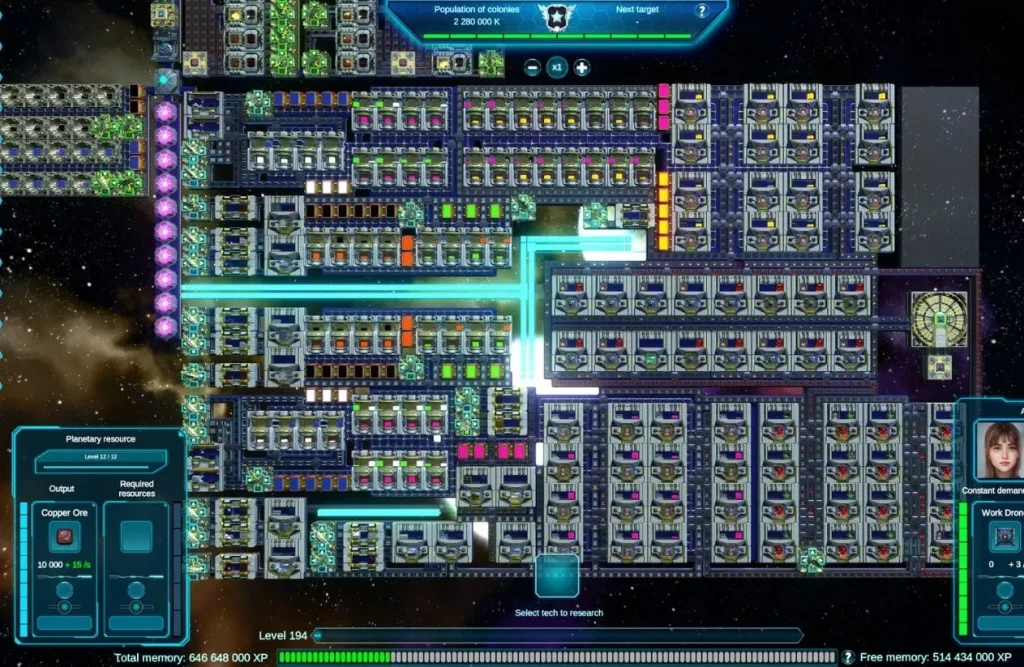
The Factory in Orbit
If Factorio is about conquering the ground, Final Upgrade is about conquering the void. This hidden gem takes the automation loop and launches it into space. You aren’t just building a static factory; you are designing modular space stations and custom starships.
The gameplay loop feels incredibly familiar: mine resources, refine materials, research tech. But the twist is that your “inserters” and “belts” are often actual ships you designed. You create the blueprints for a mining vessel, automate its logic (go here, mine this, drop off there), and then mass-produce a fleet of fifty of them.
It handles the “mega-scale” logistics of moving resources between sectors better than almost any other game. It’s janky in that charming indie way, but the depth of the logic system is top-tier.
6. Assembly Line 2
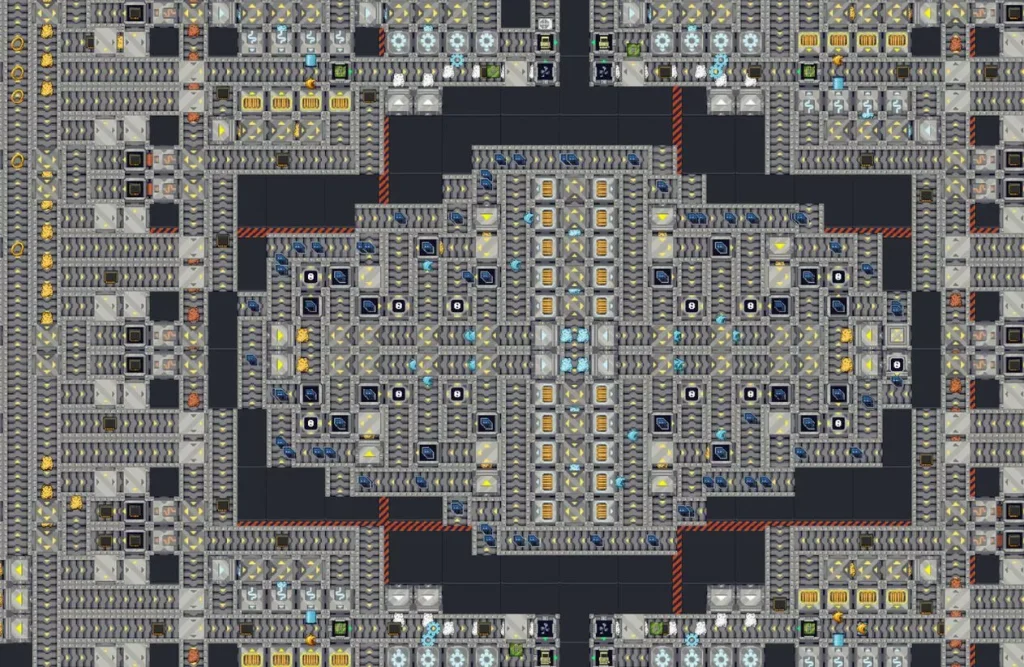
The Compact, Grid-Based Tycoon
Most automation games ask you to expand across an infinite map, but Assembly Line 2 challenges you to do the opposite: fit a perfect factory into a tight, limited space. Originally a mobile hit, the PC version brings that addictive “check on it for five minutes, stay for five hours” loop to the desktop with proper keyboard controls.
The vibe here is less about survival and more about pure capitalism. You place starters, hydraulic presses, and heaters on a strict grid to craft engines and circuits, which you then sell directly to fund upgrades. It feels like a puzzle game where the solution is money.
Because you have to work within specific room dimensions, you can’t just sprawl out—you have to design incredibly compact, smart layouts. It’s the perfect “Factorio Lite” for when you want the satisfaction of a working production line without committing weeks of your life to a single save file.
Gritty, Logic-Heavy Alternatives
7. Captain of Industry
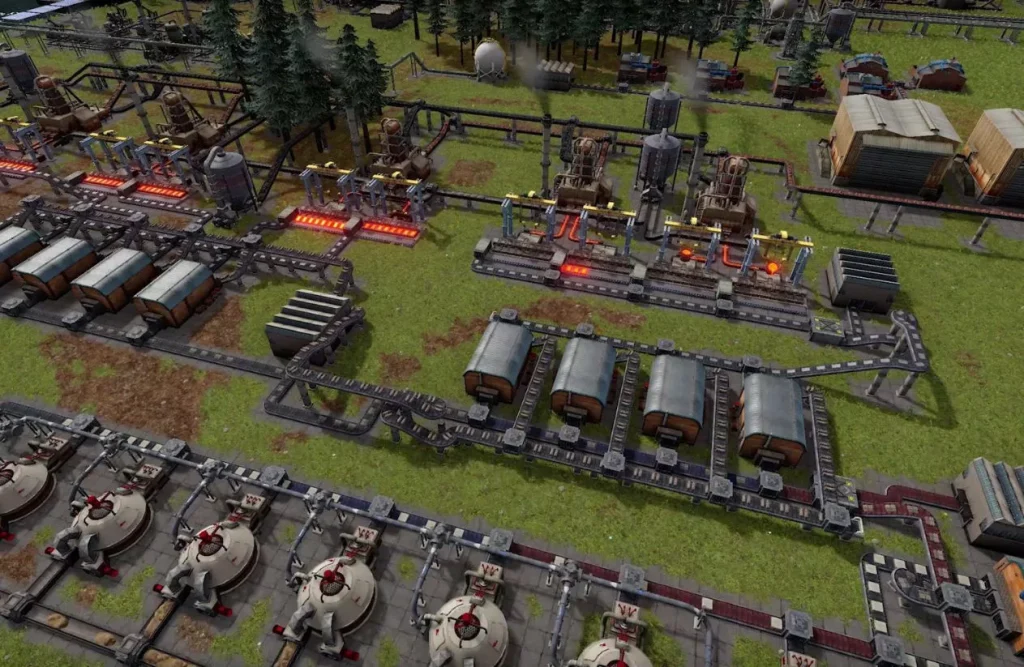
The Heavy-Duty Industrial Survival
Most factory games let you build on top of the world; Captain of Industry demands that you consume it. You land on an abandoned island and literally mine the terrain away, reshaping the coastline by dumping waste rock into the ocean to create new building space. It feels tactile and heavy in a way few other games do.
The big switch here is logistics. Instead of immediately spamming belts, you rely on a fleet of trucks to haul raw materials. You have to manage their fuel, maintenance, and routes before you can graduate to conveyor belts and massive pipe networks. It’s gritty, realistic, and brutally complex.
You aren’t just balancing input/output; you’re managing exhaust fumes, wastewater filtration, and diesel production. If you are looking for Games Like Factorio that trade sci-fi abstraction for diesel-punk realism, this is the heavyweight champion.
8. Big Pharma
The Pharmaceutical Puzzle
Think of Big Pharma as Factorio squeezed into a shoebox. While most games on this list ask you to expand, this isometric puzzler asks you to condense. You are running a drug company, but the real challenge isn’t the capitalism—it’s the factory floor.
The core hook is the “concentration” mechanic. Ingredients have specific potency windows where they cure ailments (or cause horrific side effects). You have to route them through evaporators and ionizers to hit those perfect numbers, all while fighting against incredibly cramped, oddly shaped building footprints.
You can’t just sprawl out; you have to fold your conveyor belts into tight knots to make the machines fit. It’s less about infinite scaling and more about solving a spatial logic puzzle where the pieces are constantly moving.
9. Little Big Workshop
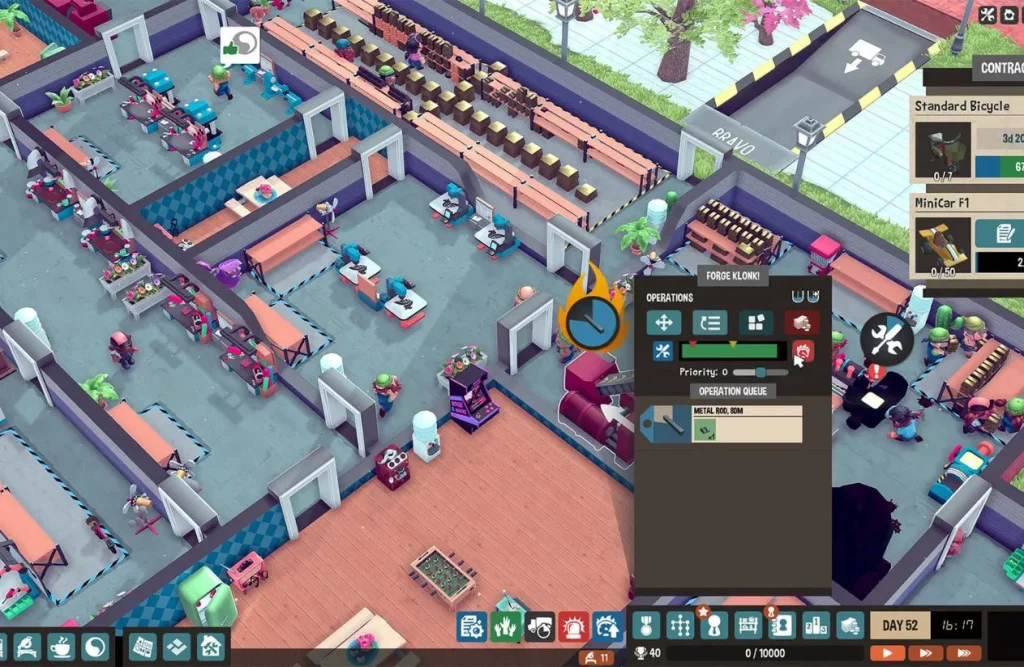
The Tabletop Factory Manager
Imagine if The Sims had a baby with Factorio and it lived on a workbench. Little Big Workshop charms you with its diorama aesthetic, but don’t let the toy-like visuals fool you—it’s a serious layout puzzle. Instead of infinite conveyor belts, your logistics network is made of people.
Your optimization challenge shifts from “belts per minute” to “footsteps per minute.” You design the floor plan, but if the break room is too far from the assembly station, your production halts because your workers are exhausted.
You have to manage stamina, organize tools so raw wood doesn’t get stuck behind a pile of finished rubber ducks, and ensure a smooth flow of traffic. It keeps the top-down perspective we love but focuses entirely on the efficiency of the workforce rather than just the machines.
The 2026 Newcomer
10. Belts of Iron
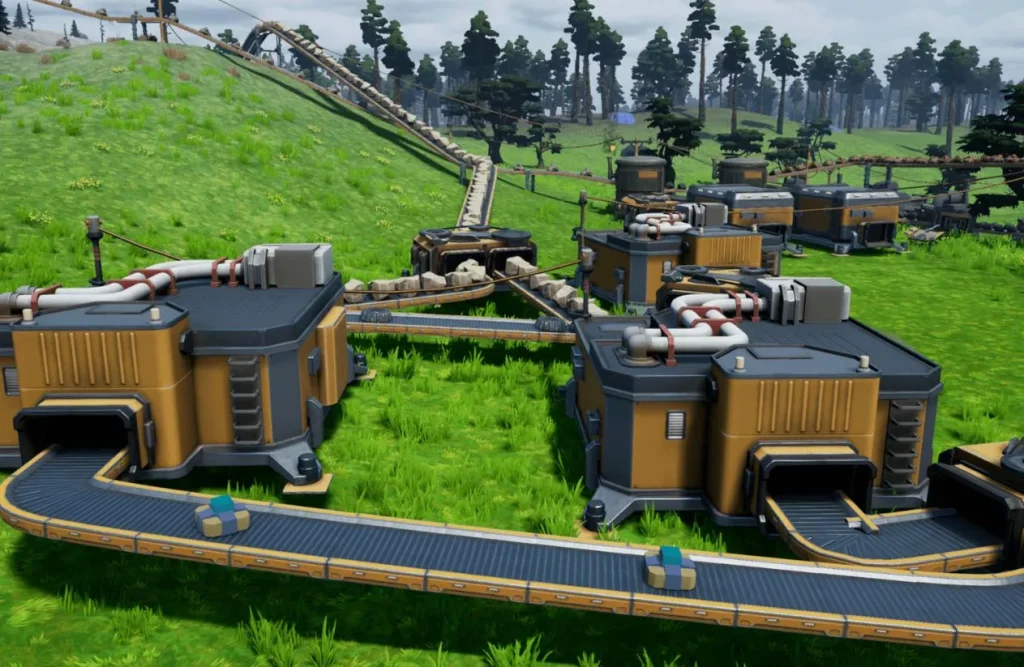
The Return to Gritty Industrialism
While many recent automation titles have leaned into cozy vibes or abstract shapes, Belts of Iron brings us back to the dirt, oil, and steel that started it all. This fresh 2026 release feels like a modern love letter to the genre’s roots, successfully capturing that specific “gritty” industrial aesthetic of early 2D games while scaling it up for a massive open world.
The premise is exactly what veteran players want: you land on a procedural planet, you exploit it, and you defend it. It strikes a brilliant balance between the “infinite expansion” of Factorio and the verticality of modern builders.
You aren’t just connecting machines; you are managing complex fluid networks and power grids while fending off hostile creatures that actually pose a threat. If you’ve been waiting for one of the new Games Like Factorio to finally respect the combat and survival elements of the original, this is the one to watch this year.
Summary: Which One Scratches the Itch?
If you are staring at this list and feeling overwhelmed, don’t worry. We’ve broken down the key differences to help you decide which of these Games Like Factorio fits your current mood.
| Game | Combat? | Complexity (1-10) | Best For… |
|---|---|---|---|
| Shapez 2 | No | 8/10 | Pure, zen-like logic puzzles. |
| Mindustry | Yes (Heavy) | 9/10 | Tower defense adrenaline junkies. |
| Dyson Sphere Program | Yes (Optional) | 10/10 | Sci-fi fans who want massive scale. |
| Factory Town | No | 7/10 | Creative 3D logistics & verticality. |
| Final Upgrade | Yes | 8/10 | Building your own spaceships. |
| Assembly Line 2 | No | 5/10 | Quick sessions & compact layouts. |
| Captain of Industry | Yes (Map) | 10/10 | Hardcore realism & terraforming. |
| Big Pharma | No | 7/10 | Puzzle lovers & spatial challenges. |
| Little Big Workshop | No | 6/10 | Managing workers, not just belts. |
| Belts of Iron | Yes | 9/10 | The classic “gritty” experience. |
Conclusion: The Factory Must Grow
So, what’s the final verdict? If you forced me to pick just one title from this list to completely replace your original addiction, it has to be Dyson Sphere Program. It captures that specific sense of overwhelming scale and logistical triumph better than anything else on the market. It is the natural evolution of the genre.
However, if you just want the “pure” logic puzzles without the stress of travel or combat, Shapez 2 is the runner-up you need to install right now. Ultimately, any of these Games Like Factorio will destroy your free time effectively. The only question is whether you want to do it in space, on a grid, or under the threat of alien attacks. Now go—the factory isn’t going to grow itself.
Also check our article: Best Games Like The Legend of Zelda